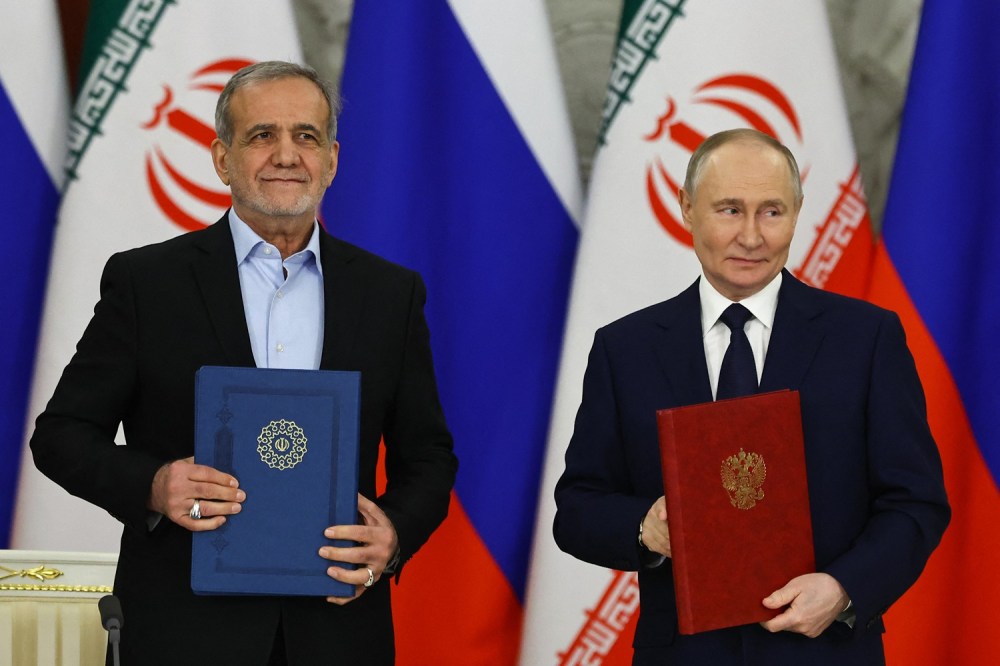
Russia-Iran Relations: US Influence, Arms Deals & Regional Power
The intricate geopolitical dynamic between Russia and Iran has become a defining feature of the modern Middle East, marked by a complex interplay of shared strategic interests, underlying rivalries, and external pressures, particularly from the United States. While both nations often find themselves on the same side in significant regional conflicts, notably in Syria, their long-term visions for the Middle East harbor potential for future friction. Understanding the nuances of Putin Iran Beziehung – the relationship between Russia and Iran – is crucial for deciphering the region's evolving power landscape, arms proliferation concerns, and the future of global stability.
This partnership, often described as a marriage of convenience, has been significantly shaped by their mutual desire to challenge American hegemony, circumvent Western sanctions, and assert greater influence in a strategically vital part of the world. From military cooperation to diplomatic alignment, Moscow and Tehran navigate a path fraught with both opportunity and inherent tension.
Shared Ambitions: Limiting US Hegemony and Projecting Stability
A primary driver for the strategic alignment between Russia and Iran is their shared objective to curtail American influence in the Middle East. For Russia, Iran serves as a pragmatic, albeit selective, partner in this broader geopolitical chess game. The increasing friction between Russia and the West in recent years has only deepened Moscow's reliance on such alliances to project its power and demonstrate its capacity to foster stability with like-minded nations.
Syria has undeniably been the crucible of this partnership. Russia leveraged the Syrian conflict to reassert its role on the global stage, showcasing its military might and diplomatic prowess. Its support for Bashar al-Assad, a traditional Russian ally, became a clear signal that Moscow stands by its partners. Iran, in turn, found a powerful international patron willing to defend its regional interests. This synergy was evident when Russian Foreign Minister Sergey Lavrov vocally supported Iran in the dispute over its nuclear program, arguing that the US, not Iran, had violated the Joint Comprehensive Plan of Action (JCPOA). This stance underscored Russia's commitment to backing Iran on issues beyond Syria, reinforcing their united front against Washington.
The shared experience of facing Western sanctions also binds the two nations. Both Russia and Iran have developed resilience in the face of international isolation, fostering a mutual understanding and a drive towards self-reliance or, at least, reliance on non-Western partners. This external pressure often strengthens their resolve to work together, seeking alternative economic and security frameworks that bypass Western-dominated institutions. The immediate goal of stabilizing the Assad regime and preventing the rise of hostile, US-backed forces in Syria provided an undeniable common ground for intense, practical cooperation.
The Diverging Paths: Hegemonic Aspirations and the Syrian Quagmire
While their immediate interests converge, the longer-term ambitions of Russia and Iran are not entirely harmonious. Experts like Jan Menzer note that both nations ultimately seek a hegemonic role in the Middle East, a goal that inherently introduces potential for conflict. Syria, despite being the focal point of their cooperation, also highlights these underlying tensions.
Syria traditionally served as a key Russian ally, and Moscow aims to restore a stable, albeit indebted, client state. Iran, however, harbors grander designs: the establishment of a "Shiite axis" stretching from Tehran through Baghdad to Damascus. This vision is deeply rooted in Iran's geopolitical and ideological interests, particularly following the territorial expansion of the so-called Islamic State (ISIS), which ideologically targeted Shiite Muslims. Iran's intervention in Syria was thus a crucial move to protect its proxies and extend its influence.
The survival of the Assad regime has been critically dependent on this Russo-Iranian synergy. While Russia provided crucial airpower, it was the pro-Iranian ground forces, including Hezbollah and various Shiite militias, that played an indispensable role in securing territory. Without these forces, it would have been impossible for the Assad regime to regain control over approximately 60% of Syrian territory. Furthermore, Iran has been a primary financial lifeline for the embattled regime. However, this deep involvement inevitably leads to questions about who ultimately holds sway in a post-conflict Syria. Will it be a truly sovereign Syrian state aligned with Russia, or a key node in Iran's regional network? These diverging visions present a complex challenge to their long-term alliance. For a deeper dive into these potential fault lines, read Russia-Iran: Can Their Syrian Alliance Withstand Diverging Aims?
- Practical Fact: Iranian-backed ground forces were instrumental in enabling the Assad regime to regain control over a significant portion of Syrian territory, complementing Russian air support.
- Insight: The long-term stability of their Syrian alliance hinges on their ability to reconcile differing visions for the country's future and regional power dynamics.
The Arms Pipeline and Non-Proliferation Concerns
A critical aspect of the Putin Iran Beziehung, with significant global ramifications, is Russia's role as Iran's principal supplier of advanced conventional arms. Over the past decade, Moscow has reportedly provided Iran with a wide array of military hardware, along with alleged transfers of know-how and technology for its ballistic missile, chemical, and biological warfare programs. Furthermore, Russia has been Iran's sole source of civilian nuclear technology, a cooperation that, while ostensibly peaceful, raises serious non-proliferation concerns given Iran's contentious nuclear history.
Despite sustained efforts by the United States and other international actors to halt these transfers through sanctions and diplomatic pressure, the arms pipeline continues. This persistence raises unsettling questions about Moscow's commitment to international arms control regimes and its broader intentions in the Middle East. For Iran, these acquisitions are vital for enhancing its military capabilities, strengthening deterrence against perceived threats, and achieving the regional status and influence it seeks. The continuous flow of advanced weaponry not only complicates international efforts to manage regional conflicts but also poses a direct challenge to the global non-proliferation framework.
The implications of this arms trade are far-reaching, impacting the stability of the entire Middle East and potentially undermining the integrity of international non-proliferation treaties. Russia's strategic calculations appear to prioritize its geopolitical influence and economic gains from arms sales over strict adherence to Western-backed arms control initiatives, especially in contexts where it views the U.S. as a rival. This creates a difficult policy challenge for Washington and its allies, as they seek to navigate a complex landscape of arms proliferation and regional power competition.
Israel: A Critical Wedge in the Relationship
Another significant factor influencing Russia-Iran relations, and a potential "spoiler," is Israel. The expanding presence of pro-Iranian forces and militias in Syria represents an existential threat to Israel, given Iran's openly declared stance questioning Israel's right to exist. This creates a delicate balancing act for Russia, which maintains diplomatic ties with both Iran and Israel.
Remarkably, Israel has largely tolerated Russia's military actions in Syria, understanding that Moscow's primary objective is to preserve the Assad regime and assert its own regional influence, rather than directly facilitate an attack on Israel. In return, Russia, despite occasional verbal criticism, has largely tolerated Israeli airstrikes against Iranian positions and arms convoys within Syria. This pragmatic understanding underscores Russia's strategic flexibility, prioritizing its broader geopolitical goals over strict loyalty to its Iranian ally when faced with a powerful regional actor like Israel.
The United States has also attempted to exploit this dynamic, signaling a potential willingness to accept a Baschar al-Assad-led Syria if he distances himself from Iran. This offer, while appealing to Assad's desire for international legitimacy, highlights the deep fissures that Israel's security concerns introduce into the Russia-Iran alliance. It's a testament to the complex and often contradictory alliances at play in the Middle East power struggle. To explore this intricate triangle further, delve into Middle East Power Struggle: Russia, Iran, and the Israel Factor.
- Expert Insight: Russia's tacit acceptance of Israeli strikes in Syria demonstrates its willingness to prioritize pragmatic geopolitical interests over ideological alignment or absolute loyalty to its allies, especially when an escalation could complicate its own objectives.
- Consideration: The continuous tension between Iran and Israel will remain a key variable shaping the depth and limits of the Russia-Iran military and strategic cooperation in the Levant.
Conclusion: A Pragmatic Alliance Fraught with Future Challenges
The relationship between Russia and Iran is a complex tapestry woven from immediate shared interests, particularly in countering U.S. influence and supporting the Assad regime in Syria, and long-term geopolitical ambitions that inevitably place them at odds. While the Putin Iran Beziehung has proven resilient in the face of external pressures, notably Western sanctions, and has facilitated significant military and diplomatic cooperation, it remains a pragmatic alliance rather than an unshakeable ideological bond.
The arms deals, the transfer of sensitive technologies, and the intricate dance around Israeli security concerns highlight the profound implications of this partnership for regional stability and the international non-proliferation regime. As both nations continue to pursue their respective hegemonic aspirations in the Middle East, the delicate balance between cooperation and competition will be continuously tested. The future trajectory of Russia-Iran relations will undoubtedly remain a critical factor shaping the geopolitical landscape, demanding ongoing analysis and strategic foresight from global observers.