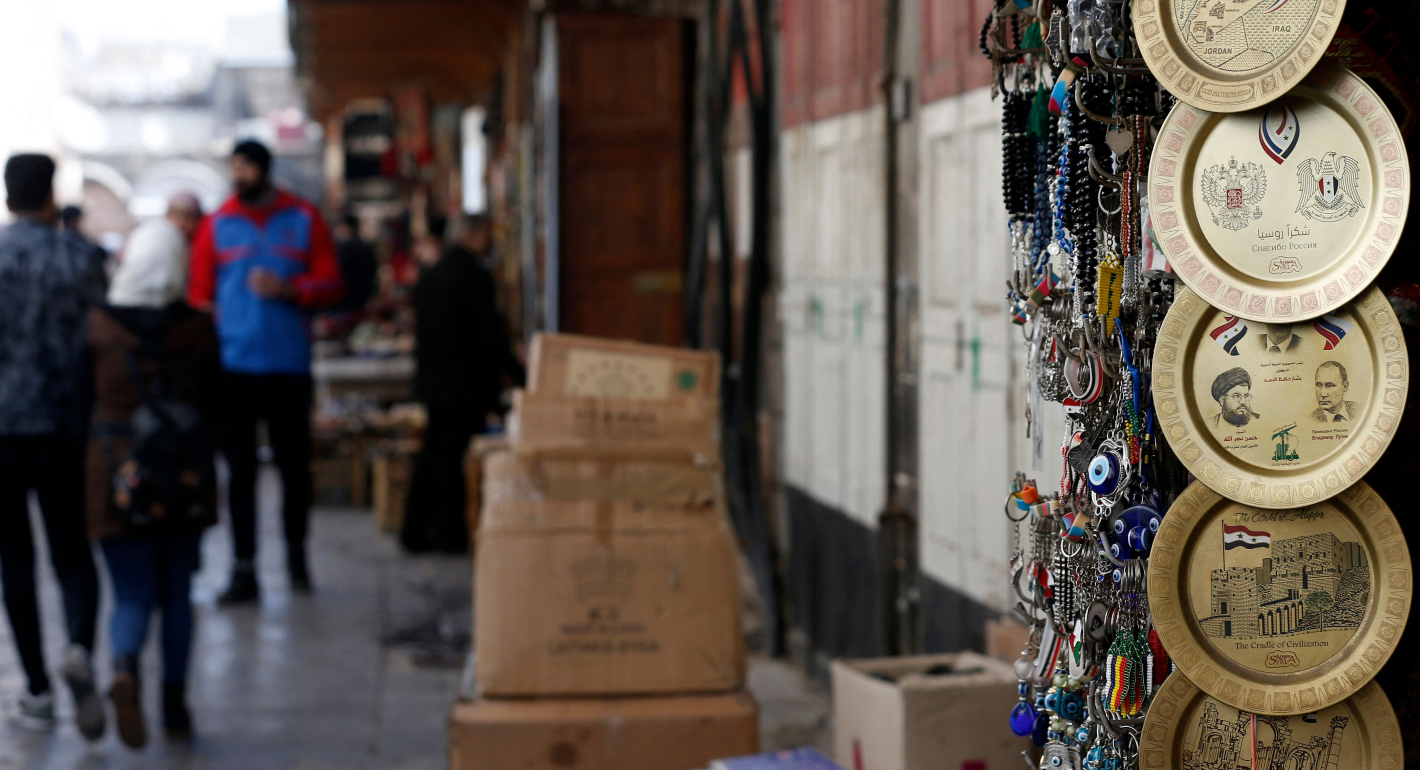
The Middle East remains a crucible of geopolitical competition, where ancient rivalries blend with modern power plays. At the heart of many unfolding dramas is a complex web of alliances and antagonisms involving Russia, Iran, and Israel. While superficially aligned on certain fronts, particularly in Syria, the underlying interests of these nations are often divergent, creating a volatile and unpredictable regional landscape. Understanding the intricate dynamics of the Russia-Iran relationship, especially under President Putin, is crucial to deciphering the future stability of this critical region.
The Moscow-Tehran Axis: A Partnership of Convenience
For years, the relationship between Russia and Iran, often encapsulated in the German phrase "Putin Iran Beziehung," has been characterized by strategic convergence rather than ideological alignment. Both nations share a fundamental interest in curtailing American influence in the Middle East and promoting a multi-polar world order. This shared ambition has forged a powerful, albeit often pragmatic, alliance.
Russia has consistently positioned itself as a counterweight to Western pressure on Iran. A prime example of this stance was demonstrated when Russian Foreign Minister Sergey Lavrov vocally defended Iran concerning its nuclear program. Moscow argued that Tehran had not violated the Nuclear Non-Proliferation Treaty or its agreements with the International Atomic Energy Agency, placing the onus of non-compliance squarely on the United States for withdrawing from the deal. This public backing isn't just diplomatic courtesy; it's a clear signal from Russia that it stands by its strategic partner, even on issues unrelated to their immediate operational cooperation in Syria.
Beyond diplomatic support, Russia has emerged as Iran's principal supplier of advanced conventional weaponry. This flow of arms and, allegedly, ballistic missile and chemical/biological warfare technology, alongside civilian nuclear expertise, has significantly bolstered Iran's military capabilities. Iran’s decade-long quest for greater self-reliance, stronger deterrence, and enhanced regional status has found a willing enabler in Moscow. For Russia, these transfers serve multiple purposes: generating revenue, strengthening a key regional ally, and implicitly challenging Western sanctions and non-proliferation efforts. This deep military-technical cooperation underscores the strategic depth of the Putin-Iran relationship, posing significant policy challenges for the international community concerned about regional stability and the proliferation of sensitive technologies.
Syria: A Chessboard for Regional Ambitions
Syria has undoubtedly been the crucible where Russian and Iranian interests have most visibly intersected and, at times, diverged. Both nations are staunch allies of Syrian President Bashar al-Assad, yet their long-term visions for Syria and the broader region often clash. For Russia, Syria represents an opportunity to project power, demonstrate its capacity to stabilize (from its perspective) a conflict zone, and maintain critical military bases (Tartus naval facility and Hmeymim airbase) in the Eastern Mediterranean, thus securing a foothold in the Middle East.
Iran, on the other hand, views Syria as a vital component of its ambition to establish a "Shiite Axis" stretching from Tehran through Baghdad to Damascus and ultimately to Beirut. This geopolitical corridor is seen as essential for its regional influence, counterbalancing Sunni-majority states, and supporting proxy groups like Hezbollah. The rise and territorial expansion of the so-called "Islamic State" (ISIS), which ideologically rooted itself in a crisis of Sunni Islam and targeted Shiites, provided Iran with a compelling strategic imperative to intervene in Syria and combat these Islamist groups. The exodus and displacement of Sunni Muslims from areas under Assad's control, whether intentional or a byproduct of conflict, further solidified his power base, which is more reliant on minority groups like Alawites (a branch of Shia Islam) and other minorities.
Despite their differing long-term goals, their short-term tactical alliance was indispensable for Assad's survival. Russia's airpower, combined with Iranian-backed ground forces (including Hezbollah and various Shiite militias), proved instrumental in reclaiming significant portions of Syrian territory. Without the logistical and financial backing from Iran, alongside its vast network of proxies, the Assad regime would likely not have regained control over approximately 60% of the Syrian state. This mutual dependence, however, often masks the underlying competition for influence in a post-conflict Syria. The question of whether this Syrian alliance can withstand diverging aims remains a central analytical challenge.
The Israel Factor: A Critical Wedge in the Alliance
The burgeoning presence of pro-Iranian forces and infrastructure in Syria presents an existential threat to Israel, which openly views Iran's rhetoric and actions as a direct challenge to its sovereignty. Iran's steadfast questioning of Israel's right to exist fuels this apprehension, leading to a highly volatile situation along their shared borders.
This dynamic introduces a significant complicating factor into the Russia-Iran relationship: Israel's military actions in Syria. In a remarkable display of strategic pragmatism, Russia has largely tolerated Israeli airstrikes targeting Iranian and Hezbollah positions within Syria. While Moscow may offer verbal criticism, its tacit approval or non-interference in these operations signals a calculated balancing act. Russia understands that a complete alienation of Israel, a significant regional player with strong ties to the United States, is not in its strategic interest. Israel, in turn, tolerates Russia's broader military presence and support for Assad, provided its "red lines" regarding Iranian entrenchment are respected. This complex arrangement highlights Russia's ability to maintain relationships with seemingly opposing forces, leveraging its position as a key power broker.
From a U.S. perspective, the situation is also nuanced. Washington has at times indicated a willingness to accept a Syria under Bashar al-Assad, but with a critical caveat: Assad must distance himself from Iran. This condition, however, faces a significant hurdle, as Iran remains one of the Assad regime's primary financial backers and military enablers, making such a separation highly improbable without a fundamental shift in regional power dynamics.
Beneath the Surface: Looming Conflicts and Future Trajectories
Despite their current strategic cooperation, many experts predict that the Putin-Iran relationship faces significant long-term challenges. Both Russia and Iran harbor ambitions for a hegemonic role in the Middle East, a region simply too small for two such powerful and assertive players to dominate without eventual friction. Syria, traditionally a Russian ally under Assad, now also serves as a critical strategic depth for Iran's regional power projection, setting the stage for potential future clashes of interest over resources, influence, and political control.
Moreover, the continued transfer of Russian arms and technology to Iran raises troubling questions about Moscow's commitment to arms control and the future of international non-proliferation efforts. While Russia frames these transfers as legitimate defensive support, the international community, particularly the United States, views them as a significant destabilizing factor in an already volatile region. The implications extend beyond the Middle East, potentially influencing the broader international non-proliferation regime and shaping U.S.-Russian relations for decades to come.
For policymakers and observers, understanding this intricate dance is crucial. Russia's strategic maneuvering, balancing its support for Iran with pragmatic tolerance of Israeli actions, exemplifies the transactional nature of its foreign policy. Iran, driven by a desire for strategic autonomy and regional dominance, will continue to seek means to enhance its capabilities, whether through indigenous development or external procurement. The Middle East, therefore, remains a crucial arena where the immediate tactical alliances, like the current Putin Iran Beziehung, might eventually yield to deeper, more fundamental competitions for regional supremacy, with profound consequences for global security.
Conclusion: The Middle East power struggle involving Russia, Iran, and the Israel factor is a multi-layered geopolitical challenge defined by shifting alliances, divergent long-term interests, and a constant balancing act. While Russia and Iran have found common ground in countering U.S. influence and supporting the Assad regime, their individual aspirations for regional hegemony set them on a potential collision course. The Israeli dimension further complicates this dynamic, forcing Russia into a delicate strategic calculus. The future of this complex relationship will undoubtedly continue to shape the stability of the Middle East and have far-reaching implications for global security and international diplomacy.